1. Using a Local Lender Will Save You Time and Money
The Outer Banks real estate market is primarily a second-home market, meaning that most of the real estate transactions involve second homes or investment properties with current and future income on the books. While we have primary residence sales, they are a very small percentage of our overall sales. That difference has major ramifications for financing, and our local lenders are skilled at navigating those very different waters. An out-of-area lender may be fantastic at what they do in their primary residence market, but if they’re not dealing with second homes and investment sales every single day, they may not be the best choice for financing one.
Things like a Vacation Rental Addendum or Bill of Sale, for example, are rarely attached to primary home purchase contracts, but are almost always factors in an Outer Banks 2nd home or investment home purchase. And they are giant (and expensive) roadblocks when lenders (or out-of-area realtors) are unfamiliar with them.
Not only that, but appraisal costs can be higher and have more conditions, quoted mortgage rates can be inaccurate because the big-box lender didn’t factor in the vacation rental addendum (because they don’t know it exists), and last-minute delays are much more common.
Talking to a local lender will help you understand the down payment requirements, realistic closing costs and any creative options or work arounds that can put you in the best position.
2. Price-Per-Square-Foot isn’t as Important as You Think
Traditional ways to determine home value that work in primary residence markets - like price per square foot comparisons - don’t hold as much water on the Outer Banks, as far as determining the fair market value of our real estate. Yes it can be part of the value equation, but not nearly as much as you may think. Our buyers aren’t usually looking for a home to live in, they’re looking for a home to make rental income. And when the purpose is income generation, the things that buyers find valuable in a home are different.
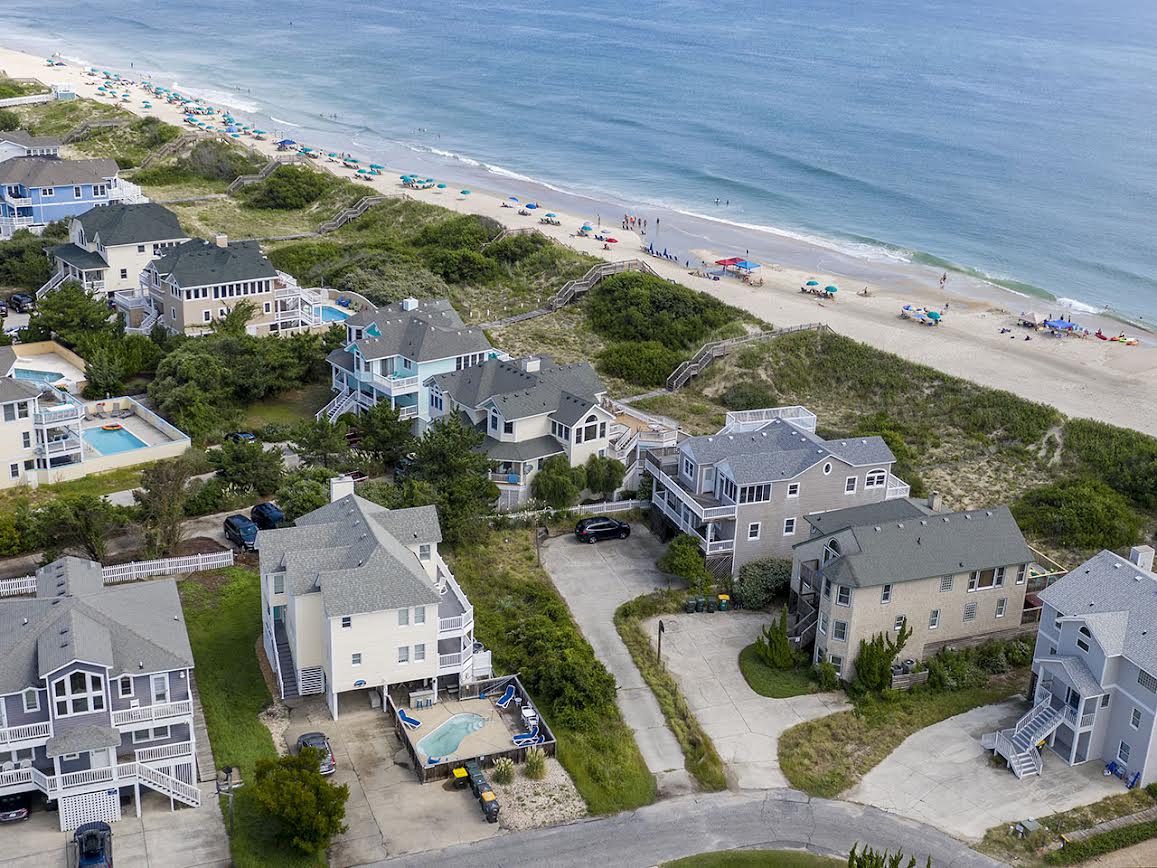
Things like proximity to beach access, the amount of bedrooms (not the size of them) or whether a home has amenities like a pool or elevator provide way more value to these buyers than whether the price per square foot is low compared to a neighbor. That just means the neighbor might not have a pool or be as close to the ocean, and buyers pay a premium for those things.
We also don’t typically have large “cookie cutter” communities where the homes are all very similar in age, layout and finishes.
If you come into the Outer Banks market using price per square foot to calculate a home’s value, you’re setting yourself up for a missed investment or a big surprise when you go to resell it.
3. Rental Income Potential is More Important Than You Think
In our second home market, where most buyers are looking for a home that they can use as a vacation rental, the amount of rental income that a home can bring in is in many cases the most important factor for buyers. They will sacrifice room size for bedroom count, since more bedrooms typically means more income. They prioritize proximity to beach access over home size, if it means more income. The list goes on an on. Taking a home’s income potential into consideration is a smart thing to do for your own use and for future resale. Even if you’re not planning to use the home as a rental, if something happens and you need to sell, you’ll have a much bigger buyer pool if the home is able to be converted to a vacation rental.
Some of the most lucrative purchases, from a buyer perspective, are ones where the home already has a full season of rental reservations booked. That buyer knows they’re walking into a purchase with $x amount of money coming in to cover the costs. That is a much less risky investment for a buyer than a home that has the potential for income, but nothing set up. That doesn’t mean a home that’s not rented doesn’t have value, it absolutely does and the prudent realtors will get a rental projection from a property management company to show its income potential, so that buyers don’t miss out on a potentially fantastic investment just because the previous owners used it for themselves and didn’t rent it.
4. It’s Normal To Not Be in a Hurry
Our second home buyers don’t have the same sense of urgency as primary residence buyers. We are a “want” market, not a “need” market. Our buyers don’t NEED to find a home in 3 months because they’re relocating and need something before school starts. But they WANT to have a property one day that they can use for vacations and rent while they’re gone.
Our buyers are more of the “I’ve been vacationing on the Outer Banks for 10 years and we’re starting to think about owning something one day, but we’re not in a hurry” buyers. And that’s ok! It’s actually quite normal. Save yourself some time and have a conversation with a local OBX realtor as soon as your “maybe one day” bug hits, because talking to a realtor about your goals early on in the process can save you a ton of time in the long run. They’ll likely also point you to a local lender, who will be just as big of an ally and time saver.
I talk to a lot of buyers and many of them say a version of this: “We won’t be ready for a couple years so we don’t want to waste your time.” And that is super courteous and respectful (I swear I get the best clients) but it’s part of the process, and any Outer Banks realtor will tell you that our profession (and your home search) is a long game. We’ve all had “leads” in our pipeline for one year, two years, sometimes longer, and eventually the time is right. The more we can work together at the beginning, the more we can point you in the right direction, help you learn everything you need to decide whether this market is right for you and if so, the best property type and location.
5. The Summer is Great, But a Total Pain in the a$$ for Viewing Homes.
The Outer Banks is a hugely popular vacation destination. Our population jumps from less than 50,000 in the winter to over one million people in the summer. And for good reason, the weather and beaches are amazing! That’s why so many people choose to invest in the Outer Banks, for our consistent vacation rental income. But summer is pretty much THE WORST time to view homes as a buyer.
It’s highly likely that at least 9 out of the 10 homes you want to tour have vacation renters in them every day during the summer. That’s a good thing, it’s what you’d want when you own it. But it means that to view the home, you have to wait for a time when it’s not rented, and on the OBX in the summer, that “time” is usually a Saturday between 10am and 3pm, that gap when one weekly rental group leaves and another weekly rental group checks in. We refer to this as “turnover day.” So you have 4-5 hours, one day a week, to view the homes. Not ideal, especially if you’re coming from out of the area and want to explore more than one town. And then when you view them, they haven’t been cleaned yet or you’re sharing the home with the cleaners, and I guarantee you someone made bacon and it smells like grease. And then there’s the turnover day traffic.
But in the winter months, from November until April, most of the homes that you want to view will be vacant and available to see very easily. They’ll be clean and tidy. You can view as many as you want in a weekend because they’re all available for you. And there’s no traffic.
In a previous blog post, I’ve talked about one of the most important first steps in the search for Outer Banks real estate being to come to the area and tour homes with a realtor. Do that in the winter, please, I beg you.