Beach Nourishment in the Outer Banks: What Is It and Why Is It Important?
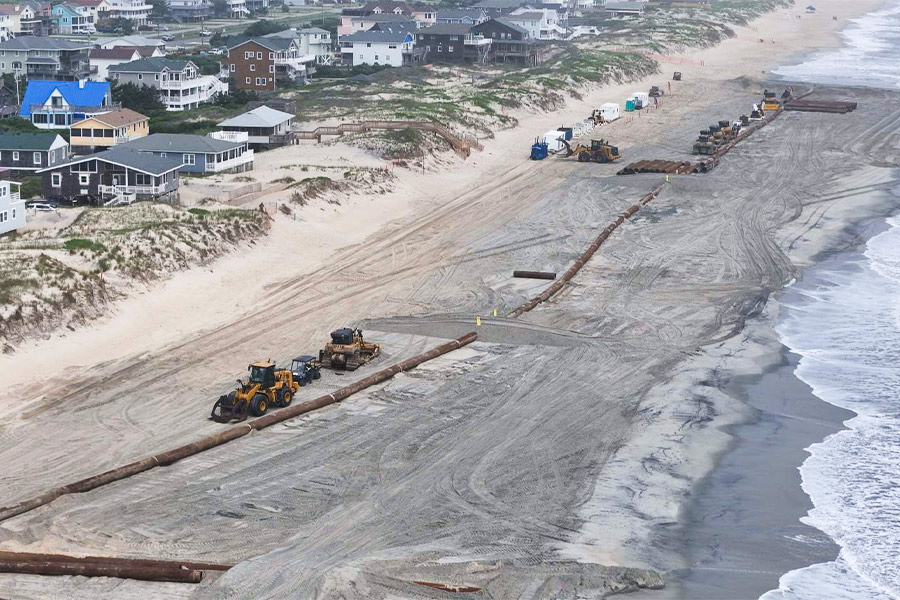
Most people that have visited the Outer Banks have probably seen the signs, equipment, and pipes along the beach announcing a nourishment project. But what exactly is beach nourishment, and why does the Outer banks need to continually add sand to its beaches?
The Outer Banks is an ever changing barrier island. Wind, waves, tides, currents, hurricanes, and nor’easters naturally move sand along the coastline. Over time, this can cause beaches to become narrower and leave homes, roads, and businesses, and other infrastructure more vulnerable to storms and erosion.
Beach nourishment is one of the primary tools used along the Outer Banks to help combat this problem.
What Is Beach Nourishment?
Beach nourishment is the process of adding sand to an existing beach to widen the shoreline and replace sand that has been lost through erosion.
In the Outer Banks, large dredges pump sand from an approved offshore source onto the beach. The sand is then distributed and shaped along the shoreline to create a wider beach.
The goal is not to permanently stop erosion. Instead, the additional sand acts as a buffer. As waves and storms naturally move sand away from the shoreline, there is more sand available to absorb that energy before it reaches dunes, roads, homes, and other infrastructure.
Why Does the Outer Banks Need Beach Nourishment?
The Outer Banks is made up of barrier islands, which means the coastline is naturally dynamic. The shape and location of the shoreline can change over time as sand is moved by waves, currents, wind, and storms. Hurricanes and nor’easters can accelerate that process dramatically.
A major storm can remove large amounts of sand from the beach, cause overwash, damage dunes, and push water and sand toward roads and buildings. In some areas, erosion can become severe enough to threaten N.C. Highway 12. A wider beach provides another layer or protection between the ocean and everything behind it.
How Does Beach Nourishment Help?
Protecting N.C. Highway 12
One of the biggest reasons beach nourishment is important on the Outer Banks is protecting N.C. Highway 12.
Highway 12 is a critical transportation route for many Outer Banks communities, particularly on Hatteras Island. In areas where the beach has become narrow, storm surge and overwash can threaten the roadway.
Dare County identifies protecting N.C. Highway 12 from storm surge and overwash as a primary goal of its beach nourishment projects.
When the beach is wider, there is more sand between the ocean and the highway, providing another line of defense.
Protecting the Dunes
Beach nourishment doesn’t just create a wider beach. It can also help support the dune system. Dunes are one of the Outer Banks’ most important natural defenses against storms. Wind carries sand inland from the beach, where vegetation such as sea oats helps trap the sand and build stable dunes.
After nourishment projects, native vegetation can be planted to help stabilize the newly created dunes. In 2026, Dare County planned extensive plantings of native, salt-tolerant species including American beachgrass, sea oats, and bitter panic grass as part of its nourishment project.
Preserving Public Beaches
A healthy, wide beach is not just important for storm protection. It’s also one of the biggest reasons people come to the Outer Banks. Beach nourishment helps maintain wider recreational beaches for residents, visitors, and property owners to enjoy. For a community whose economy is heavily connected to tourism, maintaining accessible beaches is extremely important.
Providing Wildlife Habitat
Beaches and dunes are also important habitats for coastal wildlife.
Sea turtles, shorebirds, and other species depend on healthy beaches and dunes. After nourishment projects, additional work such as sand tilling and vegetation planting can help restore the beach and improve habitat conditions.
For example, following Nags Head’s 2026 nourishment project, crews tilled the newly places sand to loosen areas compacted by construction equipment and help restore natural beach conditions and wildlife habitat.
Protecting Homes and Businesses
A wider beach provides additional space for waves and storm surge to expend their energy before reaching oceanfront properties.
This doesn’t mean nourishment makes a property immune to storm damage. The Outer Banks remains a hurricane-prone coastal community, and severe storms can still cause significant erosion and flooding.
However, the additional sand can provide an important buffer during storms.
Does Beach Nourishment Really Work?
One of the most common questions is if the sand eventually washes away, what’s the point? The short answer is the erosion is expected.
Beach nourishment isn’t designed to permanently stop erosion. The additional sand is intended to be a sacrificial buffer that naturally erodes over time. Think of it as giving the ocean more sand to work with.
When waves and storms remove sand from a nourished beach, that sand absorbs some of the energy that could otherwise impact dunes, roads, homes, and other infrastructure.
Dare County’s nourishment projects are designed to last approximately five years under normal conditions, after which additional renourishment is typically needed. Severe storms can change that timeline.
So if you visit a beach several years after it was nourished and notice that it looks narrower, that doesn’t necessarily mean the project failed. Sand naturally moves, and the nourishment project was designed with that process in mind.
What's Next?
Beach nourishment doesn't happen in every Outer Banks community at the same time.
Dare County currently has projects planned for Duck, Southern Shores, Kitty Hawk, and Kill Devil Hills in 2027, subject to changes in project schedules and conditions.
A Changing Coastline
The next time you see a dredge offshore or a long stretch of pipe running across the beach, you'll know what's happening beneath the construction equipment: sand is being added to help protect one of the most important and fragile parts of the Outer Banks.
It's a process that may not always be pretty while it's happening, but the goal is simple—protect the beach, protect the communities behind it, and preserve the Outer Banks for generations to come.