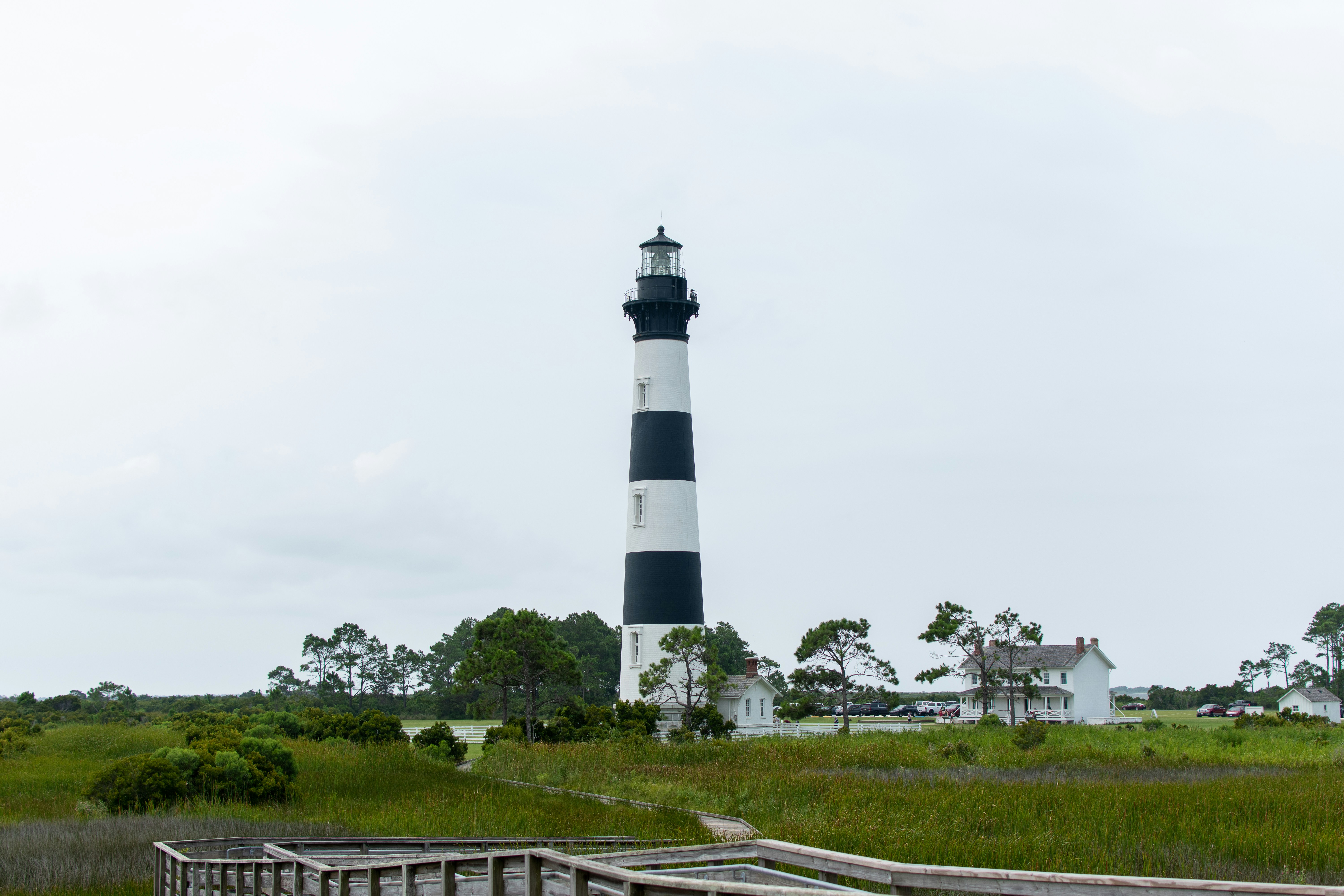
The Lighthouses of the Outer Banks
Stretching from Corolla to Ocracoke, the five lighthouses of the Outer Banks have played a vital role in guiding mariners along North Carolina's treacherous coastline for centuries.
Historically, lighthouses served as physical guides for ships, helping captains identify important landmarks and avoid dangers such as shallow rocks, reefs, and sandbars. Their lights were especially important during heavy storms, dense fog, and other conditions when navigating the coastline became difficult.
Lighthouses have helped prevent countless shipwrecks and, in turn, saved many lives along what became known as the Graveyard of the Atlantic.
Each lighthouse has its own distinctive light pattern, allowing captains to identify where they were along the coast and safely navigate their journey.
Today, these historic structures are some of the most recognizable landmarks in the Outer Banks. Here's a look at the history behind each one.
Currituck Beach Lighthouse
Standing 162 feet tall in Corolla, the Currituck Beach Lighthouse is still an active navigational aid for mariners today. Unlike the other lighthouses in the Outer Banks, the Currituck Lighthouse is known for its distinctive red brick exterior.
The light can be seen from approximately 18 nautical miles offshore, with the beacon rotating every 20 seconds.
Construction began in 1872 and was completed three years later in
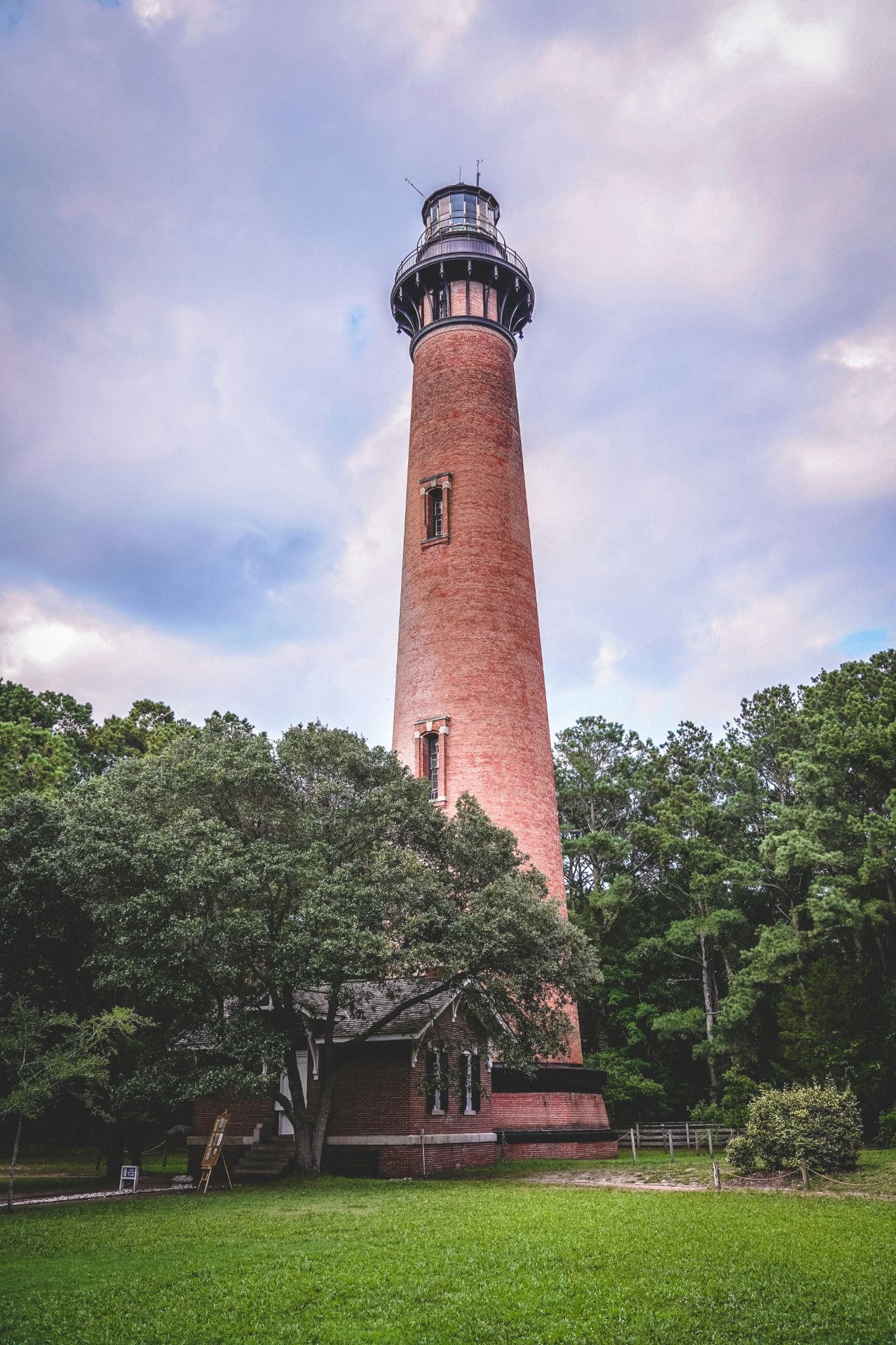
December 1875. Lighthouse keepers and their families lived on the property until the lighthouse was automated in 1937.
Today, the original lighthouse keepers' homes have been restored and are open to visitors. Some of the buildings have been transformed into gift shops and information centers, giving visitors a glimpse into what life was like for the families who maintained the lighthouse.
If you're up for the climb, there are 220 steps to the top. Visitors can climb the lighthouse for a relatively inexpensive admission, and children must meet the minimum age requirement to make the climb.
The reward at the top is a spectacular view of Corolla and the surrounding coastline.
Roanoke Marshes Lighthouse
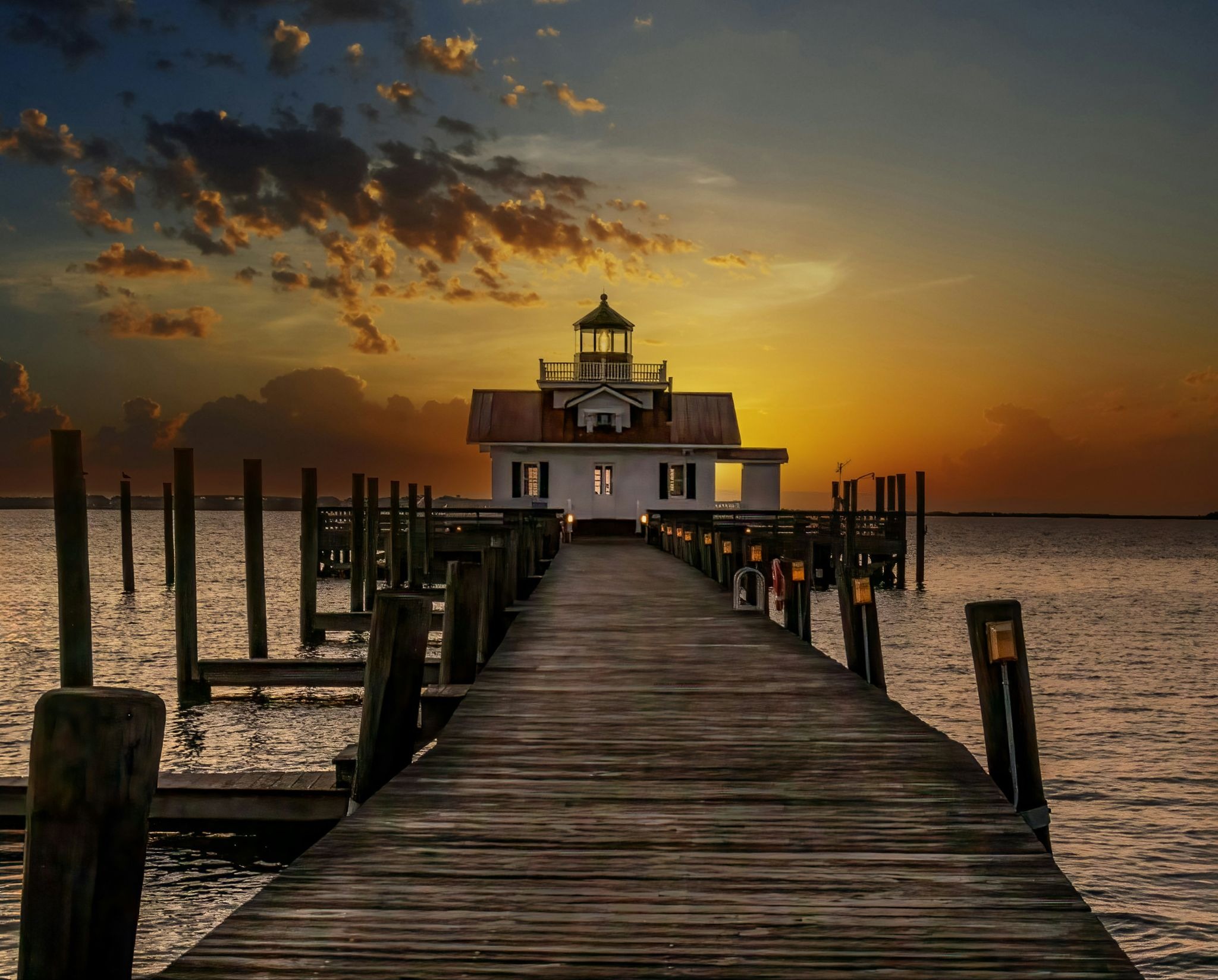
The Roanoke Marshes Lighthouse is easy to miss if you're not looking for it—and it doesn't look quite like the traditional lighthouses you'll find along the Outer Banks.
The structure standing in Manteo today is actually a replica of the third Roanoke Marshes Lighthouse. In total, there have been three lighthouses bearing the Roanoke Marshes name.
The First Roanoke Marshes Lighthouse
The first lighthouse was constructed in 1831. After only eight years, its keeper abandoned the structure, and it eventually fell into disrepair.
The Second Lighthouse
The second Roanoke Marshes Lighthouse went into operation in 1858. During the Civil War, Confederate soldiers took control of the lighthouse, and it remained in operation for approximately 15 years.
By 1872, erosion and sinking marshes had severely compromised the foundation, leaving the structure beyond repair.
The Third Lighthouse
The third lighthouse was constructed in 1877 and remained standing for more than 60 years. As newer navigational technology became available, however, the lighthouse was eventually deemed unnecessary.
The lighthouse was sold, and during an attempt to move the structure, it was unfortunately lost in the waters of the sound.
Decades later, the Town of Manteo wanted to recreate this piece of local history. Plans for a replica were developed in the late 1990s, but construction was delayed by Hurricane Isabel in 2003.
By September 2004, the replica was completed and operating as a beacon once again.
Today, the Roanoke Marshes Lighthouse sits at the end of a pier overlooking the waterfront in Manteo and serves as a reminder of the area's maritime history.
Bodie Island Lighthouse
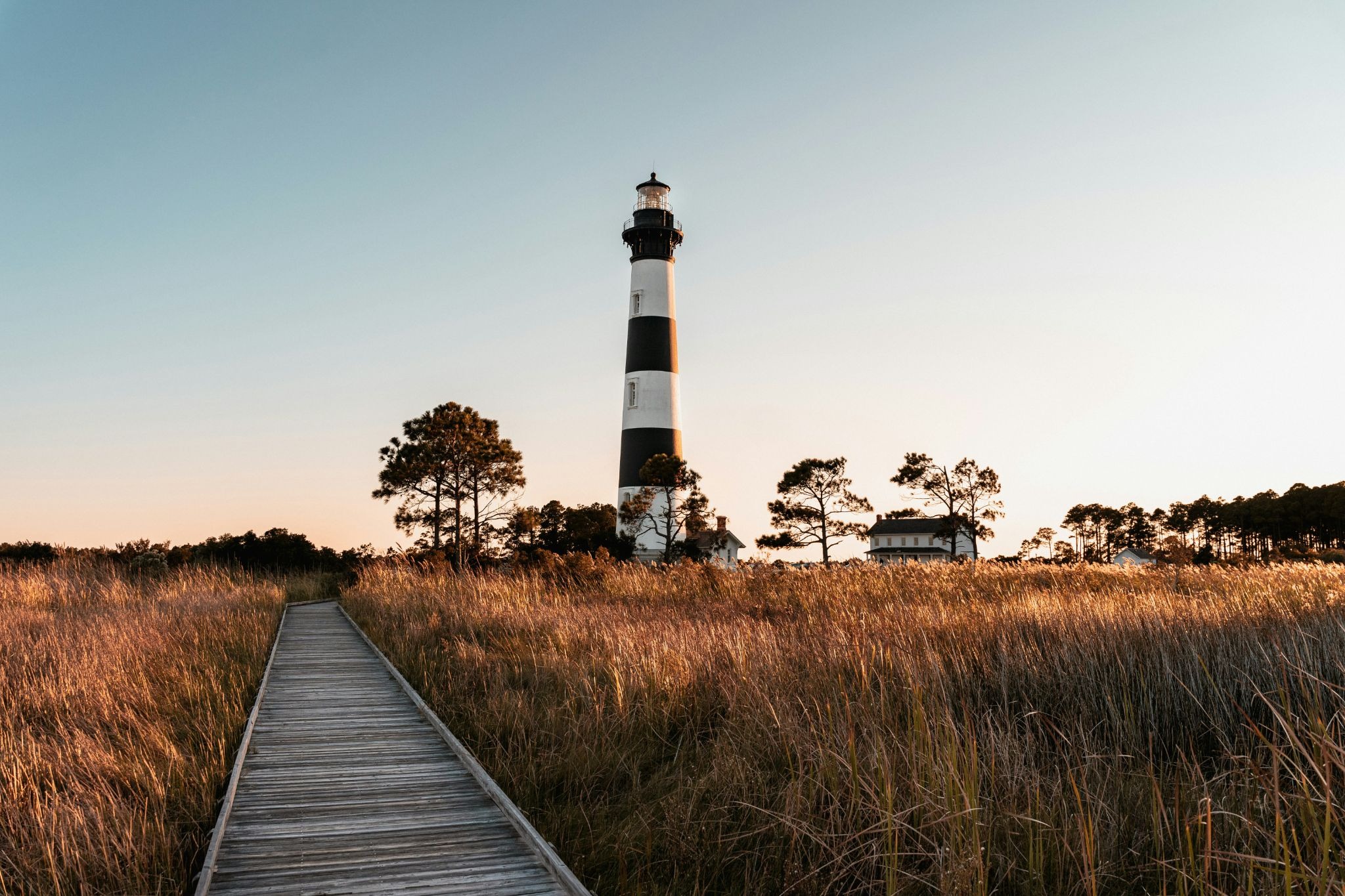
Located in South Nags Head, the Bodie Island Lighthouse is one of the Outer Banks' most recognizable landmarks.
The National Park Service undertook a major restoration project to return the lighthouse to its historic appearance. Today, when open for climbing, visitors can make the journey up all 214 steps to the top of the 156-foot lighthouse.
Its light can be seen approximately 19 miles offshore and completes a full rotation every 27.5 seconds.
The First Bodie Island Lighthouse
The first Bodie Island Lighthouse was constructed in 1847 and stood only 54 feet tall. Unfortunately, it developed major structural problems within just a few years.
The foundation was not adequately supported, causing the lighthouse to begin leaning. Repairs were considered too expensive, and the decision was eventually made to abandon the structure.
The Second Lighthouse
A second lighthouse was constructed near the original site and was first lit in 1858.
However, it suffered an even shorter life. During the Civil War, Confederate soldiers destroyed the lighthouse just two years after it began operating.
The Lighthouse We See Today
Construction on the third and final Bodie Island Lighthouse began in 1871. This time, the lighthouse was moved farther north onto a 15-acre site and was designed to be nearly twice as tall as its predecessors.
A residence for the lighthouse keepers was also constructed, and the lighthouse was completed in 1872.
The lighthouse became automated in 1932, eliminating the need for a full-time lighthouse keeper. In 1953, ownership was transferred to the National Park Service.
Today, the original lighthouse keepers' home serves as a ranger station and information center.
Cape Hatteras Lighthouse
Please check current operating status before visiting, as the lighthouse may close temporarily for repairs or restoration.
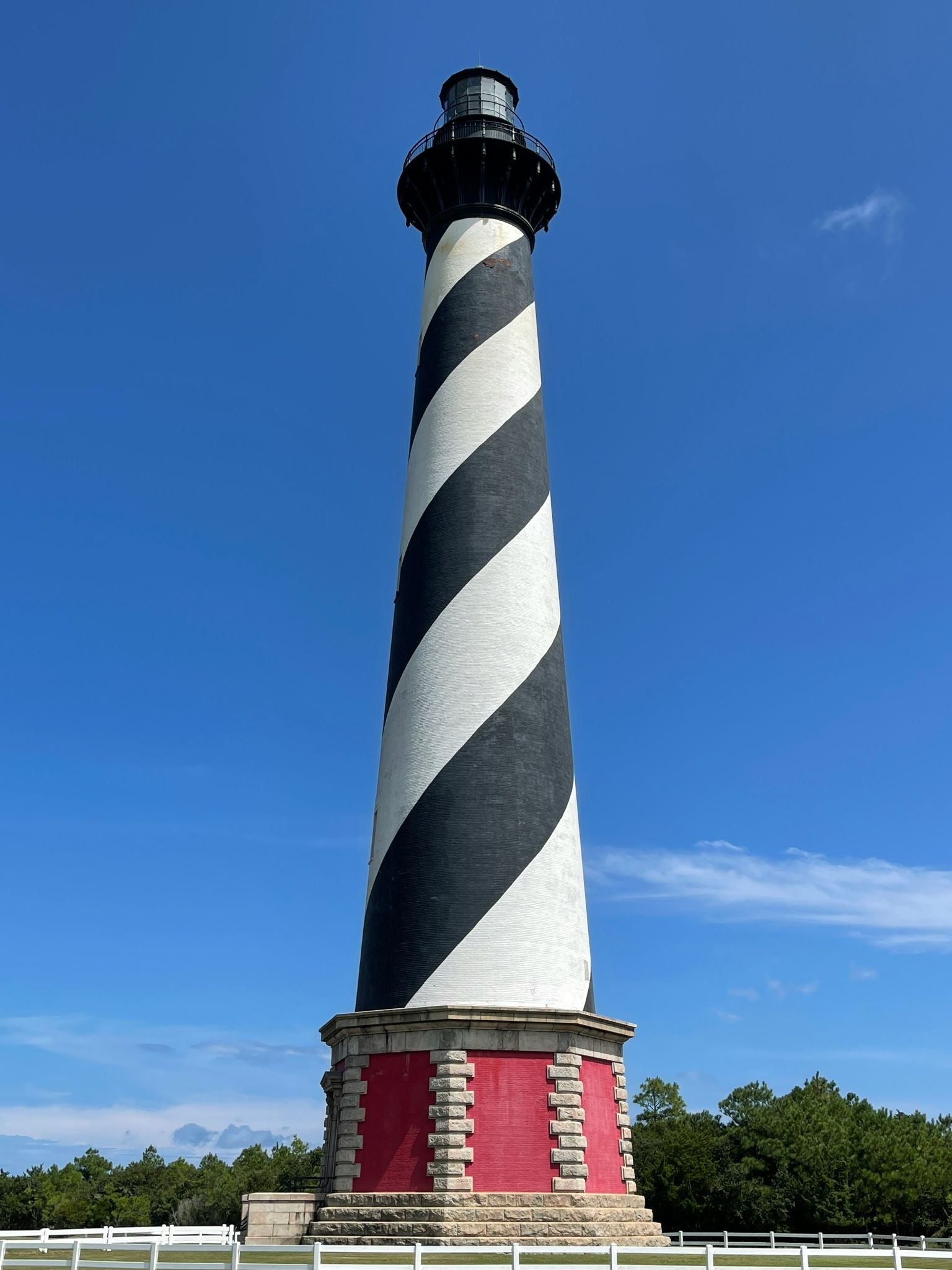
The Cape Hatteras Lighthouse is arguably the most famous and recognizable lighthouse in the Outer Banks. Its distinctive black-and-white spiral pattern has become an icon of the region.
Standing 208 feet tall, it is the tallest brick lighthouse in the United States. Its light can be seen approximately 20 miles offshore, and there are 257 steps to reach the top when climbing is available.
The First Cape Hatteras Lighthouse
The lighthouse standing in Buxton today is actually the second lighthouse built to protect ships from the dangerous waters surrounding Cape Hatteras.
The first lighthouse was only 90 feet tall. Construction began in 1794 and was completed in 1803.
After decades of proving ineffective at adequately warning ships about the dangerous Diamond Shoals, plans were made to replace it with a much taller lighthouse.
The Cape Hatteras Lighthouse We Know Today
Construction of the current lighthouse was completed in December 1870. For more than a century, it helped guide ships away from one of the most dangerous stretches of coastline in the country.
Eventually, however, a new threat emerged: shoreline erosion.
Hurricanes and powerful nor'easters continually moved the shoreline closer to the lighthouse, putting the historic structure at serious risk of falling into the ocean.
In 1999, an enormous engineering project began to move the lighthouse inland. The entire structure was relocated approximately 2,900 feet from its original location, along with the lighthouse keepers' quarters.
The move preserved one of the Outer Banks' most important landmarks and is considered one of the most impressive lighthouse relocation projects in history.
When climbing is available, tickets can sell quickly on beautiful days. Climbs are typically scheduled at regular intervals, and climbing may be suspended if temperatures inside the lighthouse become dangerously hot.
Ocracoke Lighthouse
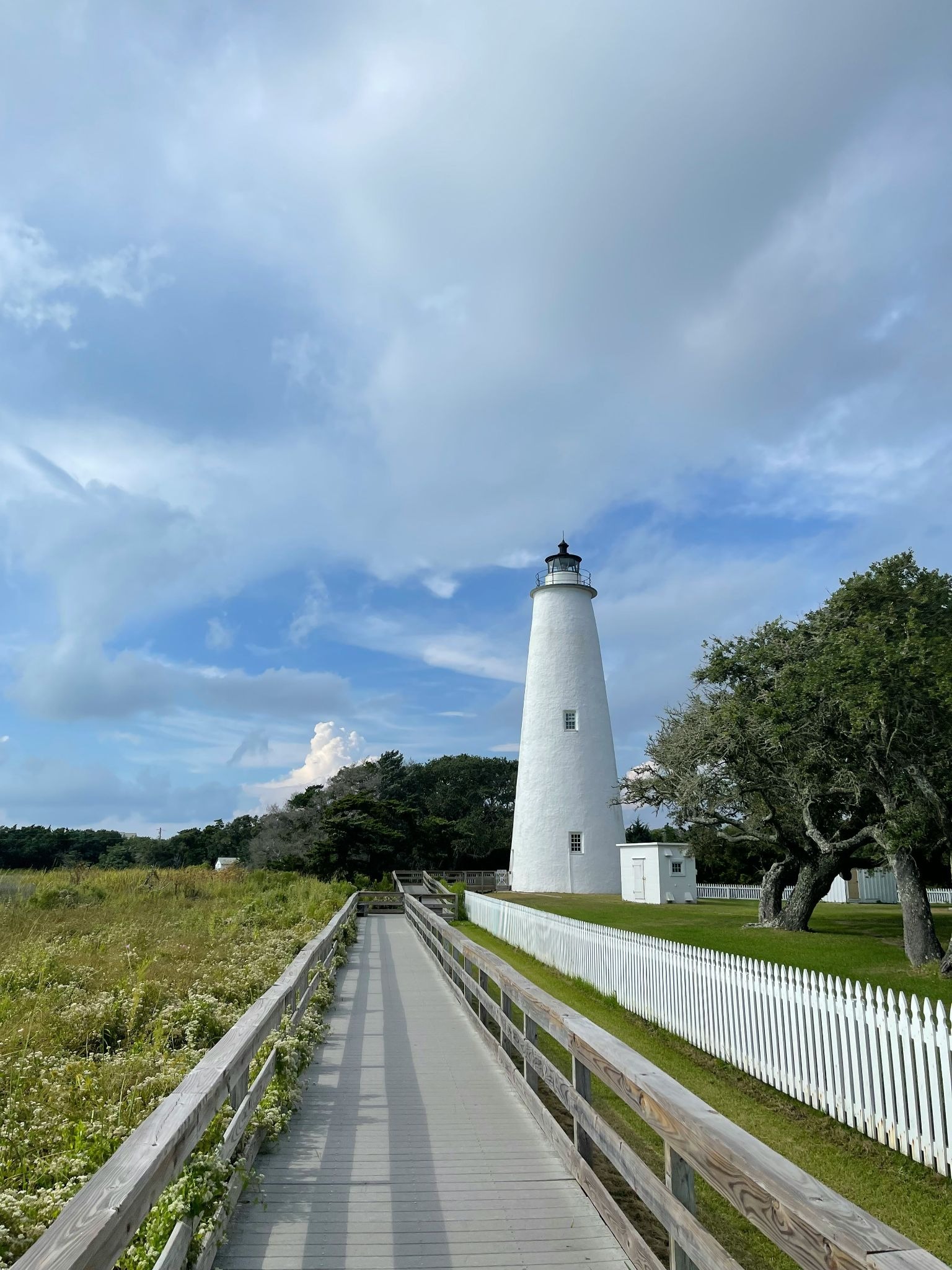
At just 65 feet tall, the Ocracoke Lighthouse is the smallest of the five lighthouses on the Outer Banks.
Don't let its size fool you, though. The Ocracoke Lighthouse is the second-oldest active lighthouse in the United States and can still be seen from approximately 14 miles offshore.
The First Ocracoke Lighthouse
In 1794, it became clear that a lighthouse was needed to help guide ships through the shifting channels around Ocracoke.
The first structure was built on a sandbar known as Shell Island. A wooden platform was constructed to support the light.
As is common on barrier islands, however, the sandbar and surrounding channels shifted over time, eventually making the original location unsuitable.
The Ocracoke Lighthouse We See Today
In 1822, the U.S. government purchased two acres on Ocracoke Island for just $50. A new lighthouse and lighthouse keepers' quarters were constructed on the property, with construction completed just one year later.
The lighthouse still stands today and was automated in the early 1900s.
Unlike several of the other Outer Banks lighthouses, the Ocracoke Lighthouse is not open for climbing. However, it is still worth visiting to see one of the oldest active lighthouses in the country.
Ocracoke is a small, walkable, and bike-friendly island. Parking around the lighthouse is limited, but the lighthouse is conveniently located close to town and is easy to reach.
Planning Your Outer Banks Lighthouse Tour
Each of the Outer Banks' five lighthouses has a completely different story. From the bright red brick of the Currituck Lighthouse to the famous black-and-white spiral of Cape Hatteras, these structures aren't just beautiful landmarks—they're pieces of the Outer Banks' maritime history.
If you're interested in history, photography, architecture, or simply want to experience some of the area's most iconic sights, visiting the lighthouses is a great way to explore the Outer Banks
from Corolla all the way down to Ocracoke.